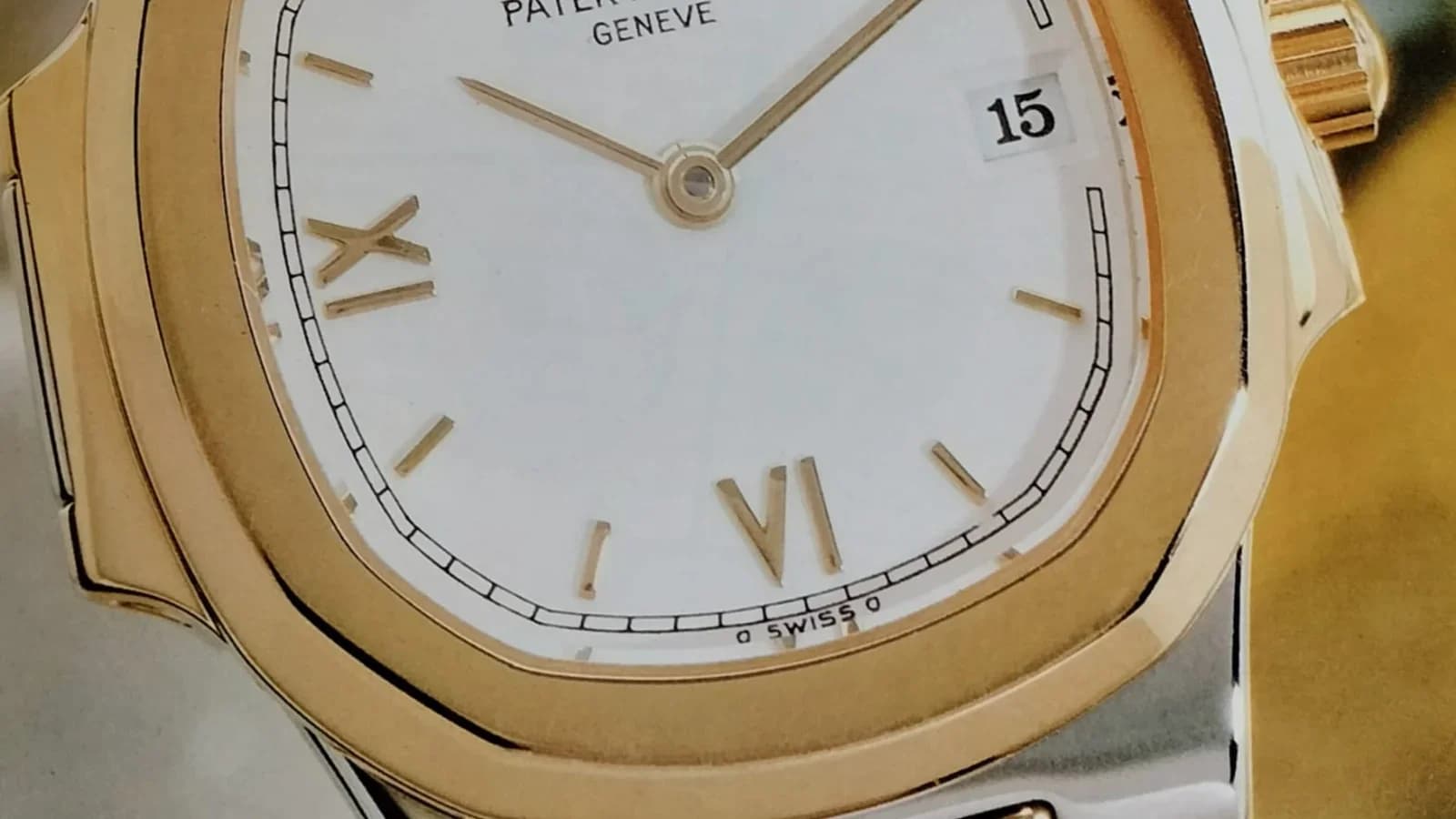
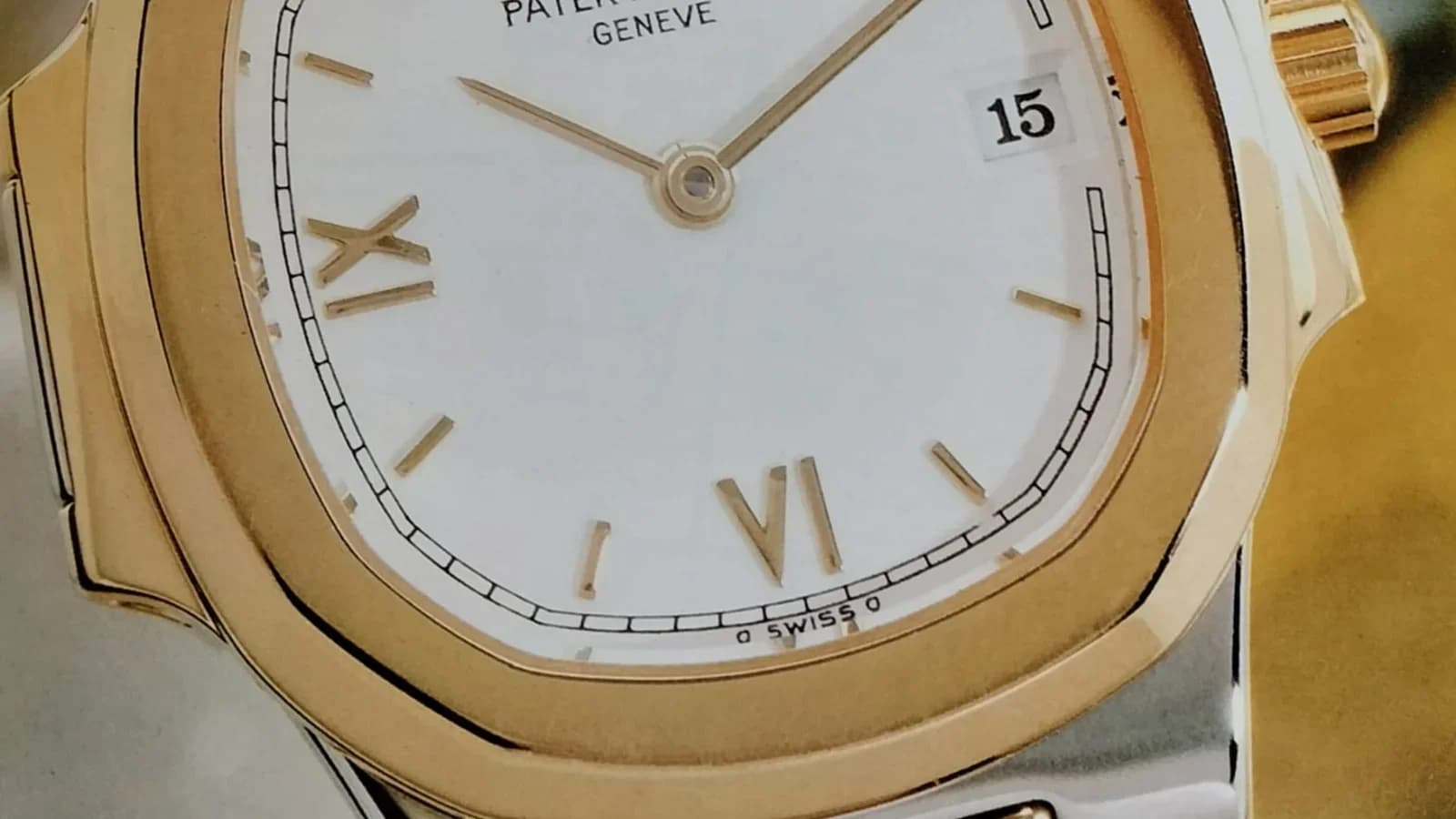
Dial
A dial is the visible face of a watch displaying hour markers and indications. It carries more resale weight than any other surface — original (unrefinished, unswapped) Rolex/Patek/AP dials move price by ±15–25%. Rare dial colours (Tiffany blue, salmon, ombré) command 30–200% premiums vs standard dial colourways.
Function
The dial sits below the crystal and:
- Displays hour markers — indices, Arabic, or Roman
- Hosts sub-dials for chronograph, GMT, perpetual calendar
- Carries the brand logo and printed text
- Provides the surface for luminous material (lume)
Dial materials
Brass / German silver
Base material in most watches. Light, takes paint well.
Mother of Pearl (MOP)
Iridescent shell with natural patterning. Used in Rolex Day-Date, Datejust special editions, Cartier Ballon Bleu Lady.
Enamel
Ceramic glazing — solid deep colour, extremely durable. Used in Patek Calatrava, Vacheron Constantin Patrimony.
Stone dial
Semi-precious stones like malachite, lapis lazuli, onyx. Used in Rolex Day-Date and Datejust specials (+80–150% premium).
Meteorite
Iron-nickel meteorite slices. Used in Rolex Daytona Meteorite, Omega Speedmaster Apollo (+40–80% premium).
Why dial drives price
1. Authenticity
Dial is the surface where counterfeiters miss most often — text font, logo position, index thickness signal authenticity. See serial number for the full verification stack.
2. Originality
Refinished dials (resurfaced during older service work) read too flat under magnification — collectors detect, price drops 15–25% on vintage Rolex. See refinished dial.
3. Patina
On vintage 30+ year watches, lume patina turning cream or yellow is premium, not problem.
4. Colour rarity
Rare dial colours pull market-priced premium:
| Dial colour | Premium over standard |
|---|---|
| Tiffany blue (Patek 5711/1A-018, 170 pieces) | +755–2,650% |
| Salmon (Royal Oak 15500) | +35–50% |
| Olive green (Nautilus 5711-014) | +16% |
| Stella (Datejust 1980s) | +80–150% |
| Tropical (faded vintage) | +30–80% |
Issues that drag price
Dial spotting
Grey or brown spots from moisture under crystal — drops price 20–35% when visible.
Refinished
See refinished dial.
Period-incorrect hands
Replaced vintage hands drop price 8–15%.
Double-signed
Retailer co-branding (Patek + Tiffany) earns a 50–100% premium. See double-signed dial.
Seller playbook
- Don't clean the dial — even if dirty: water and soap fade colour
- Don't accept Service Centre dial swap on vintage — collectors want original even when aged
- Send a face-on dial shot + macro — dealers verify font and logo position
Send dial photos via LINE — we assess originality and patina to price accurately.
Sources: Bonhams vintage Rolex dial varieties guide · WatchCharts dial variant premiums