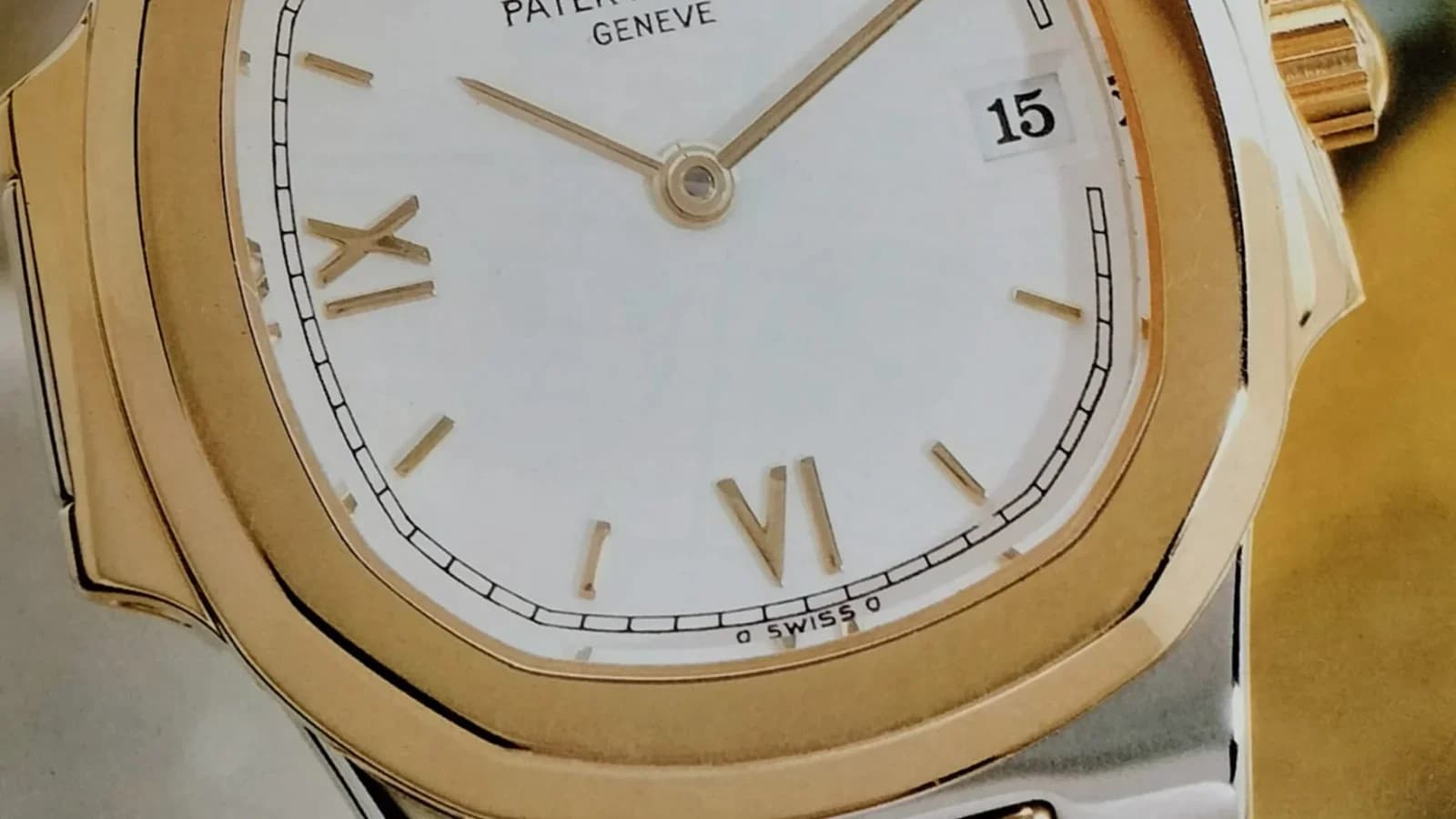

Rolex Day-Date dial diameters: 28.5mm (Day-Date 36, 118-series, calibre 3155), 31.0mm (Day-Date 40 and Day-Date 41, 228-series, calibre 3255), 28.0mm (vintage 1803 / 18038 / 18238). Modern Day-Date dial-feet sit at 12 and 6 o'clock; vintage references vary by year. Custom dials must match both the diameter and the foot position to fit without re-shimming or re-soldering.
Why Dial Dimensions Matter
A Rolex dial is held in place by two small pegs — "dial feet" — soldered to the dial's underside. These pegs slot into matching holes on the movement's mainplate and are clamped tight by side-mounted dial screws when the case is closed. If the dial's outer diameter is too small, the dial sits loose under the bezel and visibly drifts. If too large, it does not seat. If the dial feet are 0.3mm out of position, the dial cannot mount at all without modification.
Every custom dial that ships from us is cut to factory tolerance on both axes — outer diameter to ±0.05mm, foot position to ±0.10mm. The numbers below are the targets.
Day-Date 36 (118-Series, 2009–Present)
| Spec | Value |
|---|---|
| Case diameter | 36mm |
| Dial outer diameter | 28.5mm |
| Dial thickness | 0.40mm |
| Movement | Calibre 3155 (DateJust caliber 3135 + day-disc module) |
| Dial-foot position 1 | 12 o'clock (90° axis) |
| Dial-foot position 2 | 6 o'clock (270° axis) |
| Dial-foot length | 1.45mm |
| Dial-foot diameter | 0.75mm |
| Sub-dial apertures | Day at 12, Date at 3 |
References that fit: 118238, 118239, 118135, 118208, 118235, 118138, 118338, 118346, 118389, 118399. All current 118-series references share the same dial-foot pattern.
Day-Date 40 (228-Series, 2015–Present)
| Spec | Value |
|---|---|
| Case diameter | 40mm |
| Dial outer diameter | 31.0mm |
| Dial thickness | 0.40mm |
| Movement | Calibre 3255 |
| Dial-foot position 1 | 12 o'clock (90° axis) |
| Dial-foot position 2 | 6 o'clock (270° axis) |
| Dial-foot length | 1.55mm |
| Dial-foot diameter | 0.75mm |
| Sub-dial apertures | Day at 12, Date at 3 |
References that fit: 228238, 228239, 228206, 228235, 228348, 228349, 228396, 228398.
Day-Date 41 (228206 and Related, 2019–Present)
The Day-Date 41 platinum 228206 uses the same 228-series chassis as the Day-Date 40, with a 41mm case shell. The dial dimensions are identical to the Day-Date 40 (31.0mm outer diameter, same dial-foot positions, same calibre 3255). The visible difference at the wrist comes from the case dimensions and the wider bezel, not the dial.
This is why a single $685 dial fits both Day-Date 40 and Day-Date 41 references in our range — they are the same dial in different cases.
Day-Date II (218-Series, 2008–2015)
The Day-Date II was the first 41mm Day-Date, replaced by the Day-Date 40 in 2015.
| Spec | Value |
|---|---|
| Case diameter | 41mm |
| Dial outer diameter | 31.5mm |
| Dial thickness | 0.40mm |
| Movement | Calibre 3156 |
| Dial-foot position 1 | 12 o'clock |
| Dial-foot position 2 | 6 o'clock |
References: 218238, 218239, 218206, 218235, 218348.
Not currently in the $685 range. The Day-Date II uses a slightly larger dial (31.5mm vs 31.0mm) and a different calibre (3156 vs 3255). Custom dials for the Day-Date II are quoted per-watch via LINE @thaiwatchmarket — typical price $920–$1,150.
Vintage Day-Date (1803, 18038, 18238)
Vintage Day-Date references span 1956–2000 and use older calibres with different dial-foot patterns.
| Reference | Years | Calibre | Dial diameter | Dial-foot pattern |
|---|---|---|---|---|
| 1803 | 1959–1977 | 1556 | 28.0mm | 12 + 6 o'clock (different foot length) |
| 18038 | 1977–1988 | 3055 | 28.0mm | 12 + 6 o'clock (matches early 1800-series) |
| 18238 | 1988–2000 | 3155 (early) | 28.5mm | 12 + 6 o'clock (matches 118-series) |
The 18238 is the closest vintage match to modern Day-Date 36 dials — same dial diameter, same calibre family, same foot pattern. A $685 modern Day-Date 36 dial will physically fit an 18238 with 95% probability, but we still verify dial-foot length per watch before confirming the order.
The 1803 and 18038 use different dial-foot lengths and require a per-watch fit check. Custom dials for these are quoted at $720–$880 depending on year and condition of the receiving movement.
What Stops a Custom Dial from Fitting
The three blocking factors, in order of frequency:
- Dial-foot position out of spec. A previous custom dial (or aftermarket dial swap) may have left the original dial-foot solder pads damaged. The receiving movement's foot-holes need to be intact for the new dial to seat. We check this from photos before shipping; ask your watchmaker to send a movement-side photo of the dial mount.
- Movement-side day-disc or date-disc obstruction. Custom dials with deeper apertures (e.g. some skeleton-style designs) can foul the day disc on calibre 3155. This applies only to specific skeleton or semi-skeleton styles; solid stone, MOP, and meteorite dials never have this issue.
- Cracked dial-foot on the new dial. Stone dials (especially turquoise and lapis) are mounted with very small adhesive contact at the dial-foot solder point. Rough handling during shipping or installation can crack the foot loose. Our dial transport case is rated for 1.5m drop; outside that, we replace at our cost.
Calibre Service Implications
Custom dials do not affect calibre serviceability. Modern Day-Date calibres (3155, 3255) are serviced every 8–10 years regardless of the dial fitted. Service intervals do not change. The dial is removed during service and refitted afterward. If you take a custom-dialed Day-Date to an independent watchmaker for service, fitting the original Rolex dial back during the service window means the calibre can pass through Rolex Service Centre policy checks without flagging — the choice belongs to the owner.
Order a Day-Date dial — $685 →
Sources
- Rolex Technical Information bulletin TIB-3155-2 (dial mounting tolerances)
- Rolex Technical Information bulletin TIB-3255-1 (calibre 3255 dial-side specification)
- Watchmaker Bench Day-Date Reference Compendium, 2024 edition
- Our Bangkok partner workshop calibre-fit verification protocol, 2026