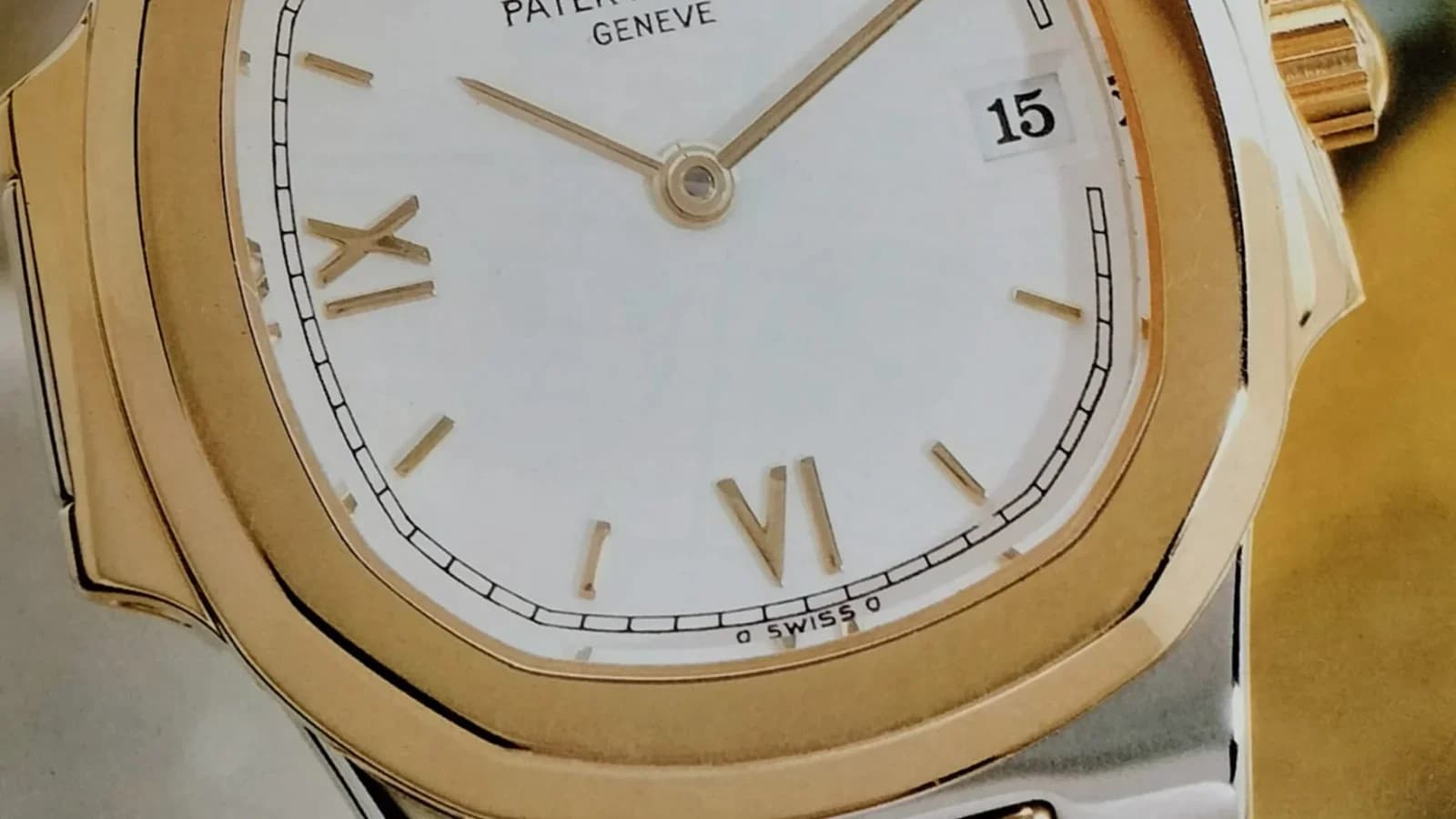

Installing a custom Day-Date dial is an 11-step process that takes a qualified watchmaker 45–80 minutes on the bench. Required tools: case-back wrench, movement holder, hand-pulling levers (presto type), 0.7Nm torque driver, dust blower, and a pressure tester rated to 3 bar. The dial swap does not modify the calibre — only the dial and hands are touched. Pressure test post-install is non-negotiable; without it, the case loses its water resistance rating.
Read This First
This page is written for watchmakers, hobbyists with prior calibre 3155 / 3255 experience, and Day-Date owners who want to understand what their watchmaker is doing before they hand the watch over.
Do not attempt a Day-Date dial swap as a first watchmaking project. The calibre 3255 is one of the more demanding Rolex calibres to handle dial-side — the day-disc engagement at 12 o'clock and the date-disc engagement at 3 o'clock both require correct sequence on hand reinstallation, or the date roll-over fails at midnight.
If you do not own a pressure tester rated to 3 bar (the Day-Date is rated 100m / 10 ATM), ship the watch to a watchmaker who does. A dial swap on a watch that subsequently fails its pressure test is a watch that will leak the first time it gets rained on.
Tools Required
| Tool | Use | Spec |
|---|---|---|
| Case-back wrench | Open the Oyster case | Rolex-specific (3-point Triplock spanner) |
| Movement holder | Hold calibre 3155 / 3255 | Bergeon 4040 or equivalent |
| Hand-pulling levers | Remove hour, minute, sweep seconds, day-disc indicator | Presto-type, calibre 3155/3255-spec |
| Dial-screw screwdriver | Release dial-side screws | 1.40mm flat blade |
| Torque driver | Reseat dial screws to spec | 0.7Nm calibrated |
| Tweezers | Dial and hand handling | Antimagnetic Dumont No. 5, fine-tip |
| Hand-fitting press | Reseat hands to spec depth | Bergeon 6700-Z |
| Dust blower | Clear dial face before sealing | Rocket blower, anti-static |
| Pressure tester | Confirm water resistance post-install | Bergeon 5555/98 or equivalent, 3 bar minimum |
Optional but recommended:
- Anti-static dial-handling pad
- Loupe (10× and 20×) for dial-foot inspection
- Digital depth gauge for hand-seating verification
The 11-Step Process
Step 1 — Case open
Remove the bracelet (Day-Date jubilee or president). Mount the case in a soft-jaw vice or Bergeon case holder. Use the calibre-correct case-back wrench. The Day-Date case-back tightens to approximately 35–40 Nm at the factory; expect significant initial resistance. Apply steady torque, no shock.
Step 2 — Movement removal
The movement is held in the case by a movement-retaining ring (Day-Date 40/41) or by case-clamp screws (Day-Date 36). Release the retaining ring with the calibre-correct tool. The movement lifts out dial-side up — handle by the edges only, never touch the dial face.
Step 3 — Hand removal sequence
The hands must come off in a specific order to clear the day-disc indicator at 12 o'clock:
- Day-disc indicator (the small fixed pointer at 12 — release with day-disc-specific lever, not a hand puller)
- Sweep seconds hand (lift straight up with presto lever, no rotation)
- Hour hand
- Minute hand
Hands handled out of sequence risk bending the day-disc indicator post, which is the most expensive single repair on the calibre 3255. If the post bends, the day-disc no longer indexes correctly at midnight.
Step 4 — Dial-screw release
Two dial-side screws hold the dial feet in place. Locate them at the calibre-3155 standard positions (3 o'clock and 9 o'clock on the calibre mainplate). Release each by 1.5 turns counter-clockwise — do not remove fully. The dial feet drop free.
Step 5 — Original dial removal
Lift the dial straight up, parallel to the movement face. The dial feet should clear without resistance. If the dial sticks, do not pry — check that the dial-screw release was complete. Place the original dial face-up in an anti-static box. The original dial belongs in the original Rolex box, kept dry, kept flat. Day-Date custom dial owners with intact original dials retain ~12% of their resale value if they decide to reinstall the original dial before sale.
Step 6 — New dial fit check (dry, no screws)
Place the new custom dial onto the calibre face without engaging the dial screws. The dial feet should drop into the foot-holes with no rotational play and no vertical bounce. Press lightly — the dial should seat with the day-disc aperture aligned at 12 and the date aperture aligned at 3.
If the dial does not seat:
- Misalignment > 0.3mm — dial-foot position out of spec. Stop and contact us via LINE.
- Vertical lift after seating — dial-foot length too short. Stop and contact us.
- Dial wobbles on the calibre — dial-foot diameter too narrow. Stop and contact us.
All three failure modes are pre-shipping QA checks. They should not occur on a dial that left our workshop. If they do, return shipping is on us.
Step 7 — New dial seating
With the dial seated, re-engage the dial screws — 1.5 turns clockwise to finger-tight, then torque to 0.7Nm with the calibrated driver. Do not exceed 0.8Nm; over-torque cracks stone dials at the dial-foot solder point.
Step 8 — Hand reinstall sequence
Hands go back on in reverse of removal:
- Hour hand — align at 12, press to factory depth using the calibre-3255 hand-fitting press
- Minute hand — align at 12, press to factory depth (must clear hour hand by exactly 0.15mm)
- Sweep seconds hand — align at 12, press to factory depth (must clear minute hand by exactly 0.10mm)
- Day-disc indicator — refit last, mount onto the day-disc post with the calibre-correct tool
Check hand clearance at every quarter — 12, 3, 6, 9 — to confirm no hand-strike across the dial face.
Step 9 — Movement reinstall
Lower the movement into the case dial-up. Re-engage the movement retaining ring or case-clamp screws. Confirm the crown stem engages the calibre cleanly — turn the crown one full turn to verify no resistance.
Step 10 — Case-back seal
Inspect the case-back gasket. If the gasket shows compression, cuts, or hardening, replace it. The calibre 3255 case-back uses a 2.30mm × 0.95mm Viton gasket. Apply silicone gasket grease lightly — too much grease prevents correct seating.
Reseat the case-back. Torque to 35–40 Nm.
Step 11 — Pressure test
Pressure-test the watch at 3 bar minimum. The Day-Date is rated 100m (10 bar) but a 3 bar dry-test catches the failure modes that matter (case-back seal incomplete, crown stem gasket damaged). If the pressure test fails, the watch is not ready to leave the bench. Re-seal and retest. If it fails twice, replace the gaskets fully.
Pre-Delivery QA — What to Verify
Before returning the watch to the owner:
- Day-disc rolls over cleanly at midnight (set to 11:59 PM, run forward — verify day changes at midnight, not 11:55 PM or 12:05 AM)
- Date roll-over is instantaneous, not crawling
- Hands sweep cleanly across the entire dial face — no strike at 12, no hesitation across day/date apertures
- Power reserve full from a full wind (70 hours target for calibre 3255)
- Pressure test pass confirmed in writing
Why You Cannot Take a Custom-Dialed Day-Date to a Rolex Service Centre
Rolex Service Centres operate under a service contract that requires every watch presented for service to be in factory-original specification. A non-original dial is, in Rolex's framing, a non-original watch. Service Centres will typically:
- Refuse service entirely, or
- Service the movement but refit a Rolex original dial (at the owner's expense, ~$1,400–$2,200 for a Day-Date dial purchased through the Service Centre), or
- Service the movement only after the owner produces and reinstalls the original dial
If you want a Day-Date that can pass through Rolex Service Centre policy, keep the original dial in the original box. At service time, ask your independent watchmaker to refit the original dial before the watch is presented. Most independent watchmakers will do this for $50–$80.
Installation in Bangkok
We offer installation at our partner workshop for $180 flat, includes pressure test pass certificate. Ship the watch with the order — receive in 5 business days, dial fitted, pressure tested, returned with the original dial in the original Rolex box. Ask via LINE @thaiwatchmarket before shipping.
Order a Day-Date dial — $685 →
Sources
- Rolex Technical Information bulletin TIB-3255-7 (calibre 3255 dial-side service)
- Bergeon Watchmaker Tool Catalogue 2026
- Watchmaker Bench Day-Date Service Procedures, 2024 edition
- Our Bangkok partner workshop install protocol, 2026